
Air and water are the basis of life on earth. Without them, there is no natural world as we know it; and unless air and water are cared for, environment is of low quality, unhealthy for people, plants and animals. If you can volunteer to help us advance in either area, or if you can recommend someone, please contact us.
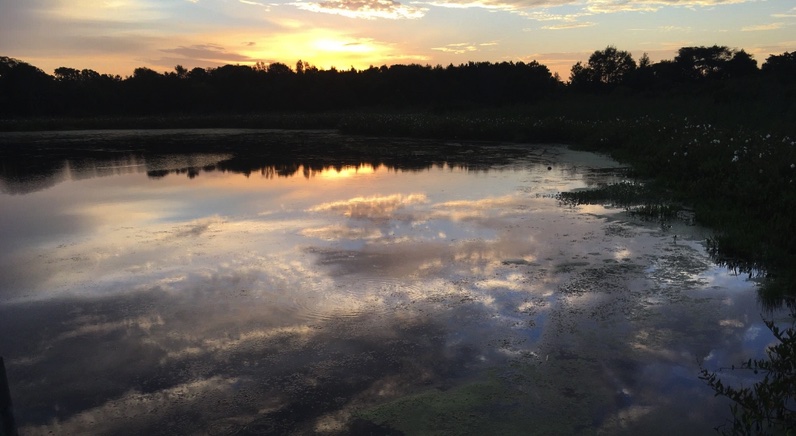
One of the Green Team’s major focuses, gardening, depends on the air we breathe and the water we drink, because polluted air and contaminated or inadequate water will not produce the healthy plants and food we deserve.
Human health is at risk. Millions of people around the globe are being poisoned by air-borne contaminants. We have seen here what happens when climate change unleashes uncontrolled wildfires, even hundreds of miles away in Canada: our air becomes hazy with unhealthy particulates. In a warning circulated by Chester County in June, 2023:
“…Poor air quality may have greater impact on sensitive groups of people such as young children, older adults and those with existing respiratory problems. However, particulates like wildfire smoke can make anyone sick….”
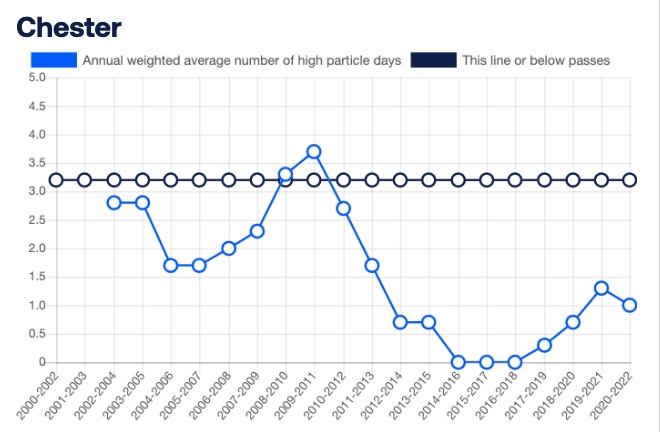
We are used to thinking of our air quality here as pretty good but progress has taken a lot of public and private work. According to the American Lung Association, Chester County’s number of high particulate days has started to head down again after rises in 2006-2011 and 2016-19 (see chart). High ozone days have also been reduced to acceptable levels since 2016.
And then there is indoor air quality. If you have new furniture and carpeting, gas stoves, or scented candles, you’ll want to search out the latest relevant information.
“Water is the driver of Nature”—Leonardo da Vinci

People are increasingly exposed to unsafe drinking water, as rivers continue to carry industrial waste and improperly processed sewage effluents, aquifers are depleted, and in some areas water tables drop to the point that wells become unusable.
According to the 2023 UN World Water Development report, in 2020 “26% of the world’s population (2 billion people) did not have access to safely managed drinking water services.”
In the US we have laws to protect stream quality, but they have been weakened by the US Supreme Court, and how irregularly the laws have been working to date can be seen from the occasional shutdown of drinking water derived from the Great Lakes (as in Toledo in 2014) and from the worsening algae contamination in Lake Okeechobee, the Everglades, and Florida’s waters downstream. Sea rise in Miami, about 6″ since 2010, is already backing up home septic systems and threatening to spread disease though floodwaters and waterways.
For threats to water quality and what water treatment plants can and cannot do to protect drinking water, see Carol Anderson, “Conservation of Water Quality and Watershed Health: Drinking Water” at Sierra Club.
On the positive side, in April 2024 the US EPA finally moved to start protecting public water supplies from a few of the so-called “forever chemicals” (PFAS), which are present in almost half of US households, with SE PA having among the highest concentrations. For EPA information on home filters to remove PFAS from your drinking water, see here.
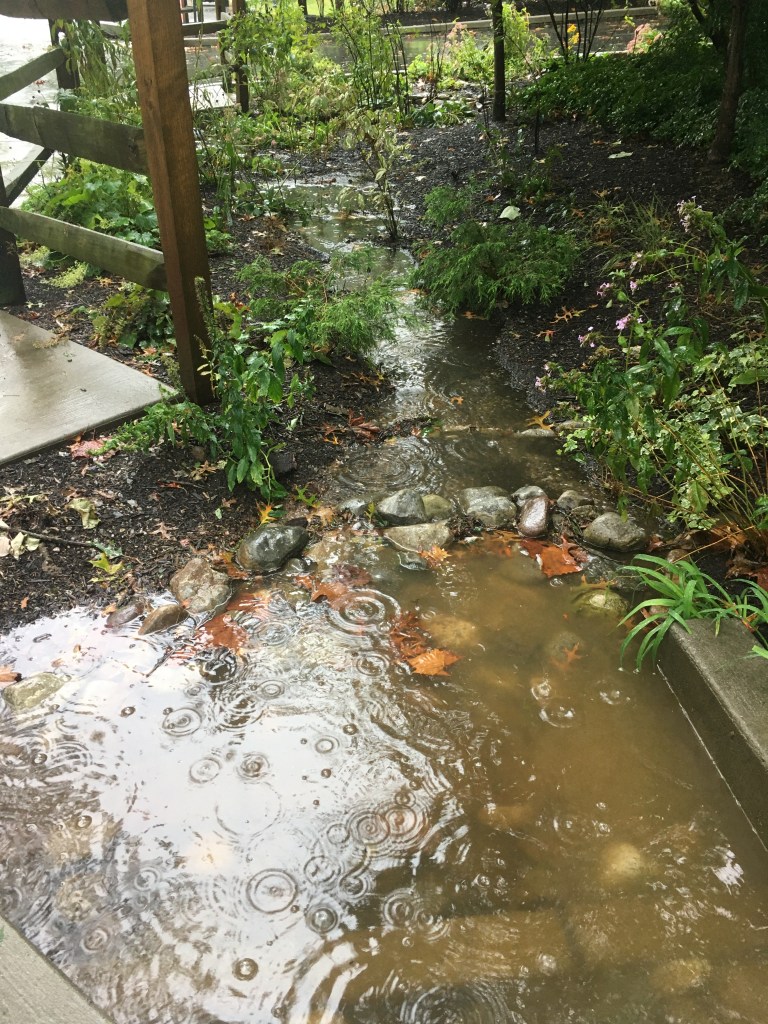
Chester County and its municipalities are taking the issues seriously, but continued development and loss of permeable surfaces make it difficult to advance in containing flooding and reducing chemical contamination. Local communities are struggling to bring their streams up to federal EPA standards. For one means of doing so, see the section on rain gardens here. For funding to improve the Goose Creek watershed, see here.
Do you want to understand better the science and data of stream quality, or the strategies needed to approach your municipality? See the locally-based resources at Manage My Watershed, developed by Delaware River Basin Policy and Practice Workgroup in conjunction with Stroud Water Research Center.
The essay “PUTTING STREAM TEMPERATURE DATA TO WORK” shows that warming temperatures are bad enough for land-dwelling organisms like ourselves, many of which have the ability to regulate their own temperature, but most stream-dwelling organisms, from unicellular ones at the base of the food chain to brook trout, are far more limited in their ability to adjust to heat, and their very existence is threatened by unaccustomed heat. The essay includes information on asking municipalities to step up and protect their streams (see more on that important aspect here).
 West Chester Green Team