The WCGT and the West Chester Garden Club are teaming up! We will be hosting a garden and house tour at select locations around the Borough. Come check out how other people care for their gardens, raise chickens, provide for pollinators and other native species, and adapt to changing landscapes. This free event will be on Saturday, June 22 from 11am to 3pm.
*Please bring water with you during the tour!*
(1) 400 Mackenzie Dr., Suburban Spirit
Wildlife-certified garden balancing nature with urbanization
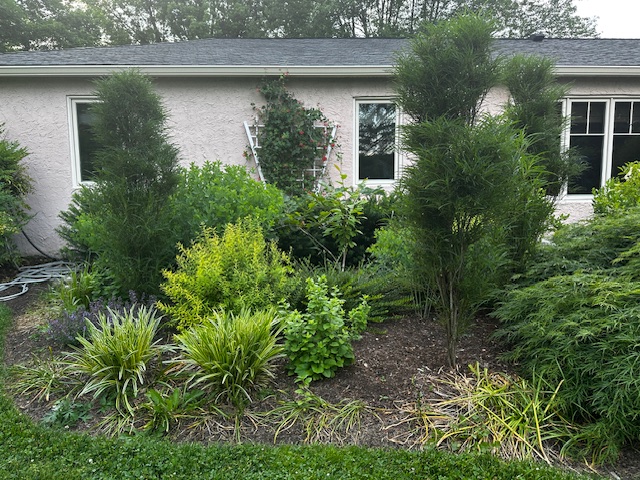
There were very few plantings when we began our gardens nine years ago. Coming from upstate NY I was eager to take advantage of a warmer growing zone. The gardens continue to evolve over time as I learn what is happy here and what struggles. Our property is about an acre and has very sharp drainage due to being on a schist/shale ledge. It can also make planting a challenge; but where there’s a will, there’s a way. All of the beds include a mixture of trees, shrubs and perennials. Many are natives but not all. The property is wildlife certified and provides multi-season interest.
(2) 405 W Ashbridge St., Landscape Architect
Shaded garden with a new bee lawn
This garden has really evolved over 20 years- when we purchased the place- we inherited a young forest of Black Locust trees, which were cut down but repurposed as retaining walls to tame to the slope for installing a vegetable garden in the rear yard. A terrace and fishpond were later carved out of the rear hill. Since adding a raised bed to the veg. garden and incorporating a winter cover- I can raise vegetables on a year-round basis. As a landscape architect, I have used the garden areas to experiment with plants that I could later use in my professional designs. Despite some failures, my success rate has been good; to date, I have 110 trees and shrubs and 385 perennial plants on a property just under ⅓ acre. The consequences of having this many trees and shrubs have changed the environment from a once-sunny yard to having mostly shaded garden beds. Despite the shade, we managed to add solar panels to the roof two years ago. This year’s introduction is a “Bee Lawn”- which replaced an area of a turf lawn.
(3) 303 Mayfield Ave, Truck Farmer
Four-season garden using the power of worms
My wife is an awesome home chef! She wanted the tastiest Italian-based vegetables we could grow. The garden started with two small beds. It now covers over 600 sq ft! Powered by the world’s best garden helpers…WORMS! No-dig techniques have lessened my efforts while increasing production and overall enjoyment. Recently, we’ve expanded to a four-season garden, from winter greens through summer tomatoes. We look forward to seeing you soon.
(4) 323 W Biddle St., Green Lifestyle: Pond
A backyard oasis for chickens, toads, and pollinators
This backyard features a vegetable garden, a composting area, a natural pond, pollinator-friendly plantings, and chickens. The homeowners are in the process of adding an addition and an underground rainwater cistern for stormwater management.
(5) 234 E Biddle St., Walk by the Park
Year-round front yard for birds and bees
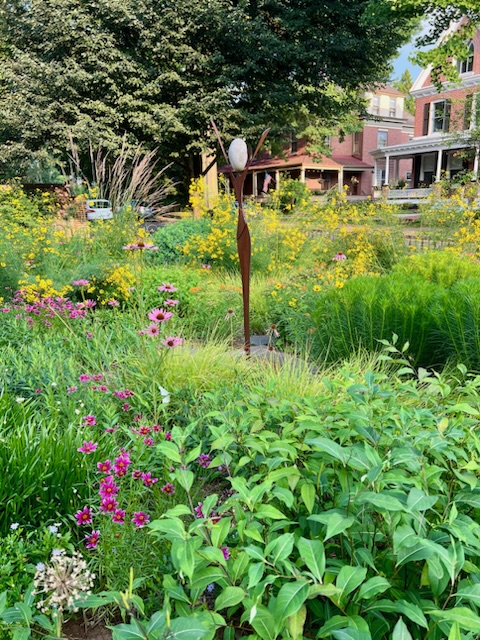
The wide front slope of this beautiful house facing Marshall Square park required a complete overhaul when the new owners took over the property. The front yard now features year-around interest for passersby as well as nectar and berries for bees, birds and butterflies from February through December.
(6) Prescott Alley/Chestnut Street, WCGT Pollinator Garden
City and community garden brought to life through volunteers
Planted in 2022 by WCGT volunteers, the garden was a collaboration with the West Chester Business Improvement District (WCBID), who provided the funding for the plants. This was a pilot project which was to provide incentive for an alley beautification program in West Chester Borough. The garden is situated on the south side of the Chestnut Street Parking garage, which for years was essentially a vast mulch bed with a sparse planting of some spring flowering bulbs. The garden features bee nesting logs, a water source and a diverse assortment of native and beneficial plants, from ornamental trees down to perennial plants. The garden is jointly maintained by the WCGT and WCBID.
(7) 119 W Miner St., Borough Beauty
Our English garden has evolved for several years. Designed and maintained by our son, Sam Keitch, who is employed by the Philadelphia Horticultural Society, the garden changes from spring tulips to fall grasses.
(8) 511 W Miner St., Focus on Herbs
Rainwater collection, green roof, and medicinal and culinary herbs
In 2011, we completed the rehabilitation of our 1887 twin home, designed by T. Roney Williamson, architect of the First West Chester Fire Company, and West Chester Public Library in the Queen Anne Revival Style. With a goal of maximizing the sustainability of the dwelling while preserving its historic character, we built a rainwater collection system and a 1500-gallon underground tank for garden watering; installed 4 geothermal wells and geothermal HVAC system, used all built-in LED lighting (which was quite unusual at the time), dual-flush toilets, and other green features. For the landscape, we removed invasive bamboo, other invasives, and sod from the front yard, then covered everything with a 4-inch layer of wood chips over 4 inches of topsoil, and proceeded with planting a combination of native and non-native plants to create what has become known as “the natural garden,” as defined and elaborated by Henk Gerritsen and Piet Oudolf, landscape architect and designer of the High Line in New York City. A few years later we added a garage with a green roof, designed in the form of a slat house referring to Wiliam Everhart’s garden house in the side yard of his mansion a few blocks away on the 100 block of West Miner Street. With heavy shade in the backyard, the only location for a sunny herb garden was either the front or side yard. We opted for the side yard, and now enjoy fresh herbs from the side yard and full-sun perennials in the front yard, which bring us great pleasure while providing a gift to the street. A list of the medical and culinary herbs will be available on the day of the tour.
(9) 318 W Union St., WC Garden Club
Colorful native plants covering the yard
This garden was started back in 1983 and gradually has taken over the entire lawn area. Plantings include a number of native perennials which include Amsonia hubrechtii, Joe Pye Weed, Asters, Agastache canadensis, Geranium maculatum, Wild ginger, Cornus florida, Oak leaf hydrangea and Button bush to name a few. In the spring there are a variety of bulbs that create color in the front garden and other perennials are mixed in with bloom times throughout the growing season.
(10) 324 W Union St., Lawn Alternative
Urban garden lawn alternative and recultivating backyard
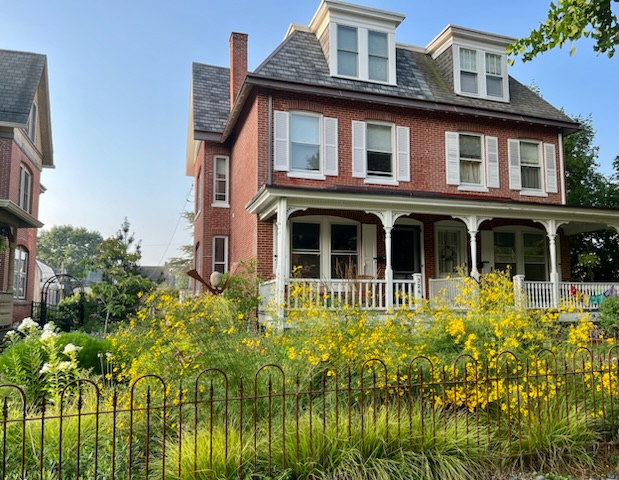
The front garden/urban meadow contains only herbaceous perennials and bulbs, not needing water, mowing or mulch. I began this garden in 2019 by killing the lawn with horticultural vinegar. I did not remove the dead sod, but planted the perennials through the sod. I chose a palette of non-native and native plants that would provide changing colors, heights, and textures throughout the growing season as well as food and habitat for birds, bees, and butterflies.
When we moved to this property in 2015, every bit of the previous owner’s backyard landscaping had to be removed to provide access for excavation and the construction of the addition at the rear of the house. With the help of friends, those plants were dug up and given away. We have been slowly working to improve the soil ever since, steadily adding organic matter and loosening the compacted layers. My husband makes compost from our kitchen scraps and some of our yard waste, so long as they don’t contain seeds. The back garden was not planned and executed like the front garden. Here I indulge my tendency to collect plants and try new combinations. There are trees, shrubs, perennials, vines, and annuals. I do plant with pollinators in mind. I regularly “edit” this garden, moving plants around and making space for newcomers. I’ll be installing a crevice garden in the coming year.
(11) 409 W Union St., Aging in Place–Hazley Builders*
Site of Hazley renovation for aging in place
This 1876 Victorian house needed a full bath on the first floor, accessible kitchen storage, a wider back porch and a railing to make it safe for senior citizens. The renovation by Hazley was completed in December, 2023, and the owners are still in the process of getting used to living in it and deciding how to furnish it. In addition, the front yard showcases a successful lawn conversion, where pollinator-friendly perennials are now providing shelter and food to beneficial insects.
(12) 899 Sheridan Dr., Hillside Garden*
A hillside garden for the birds
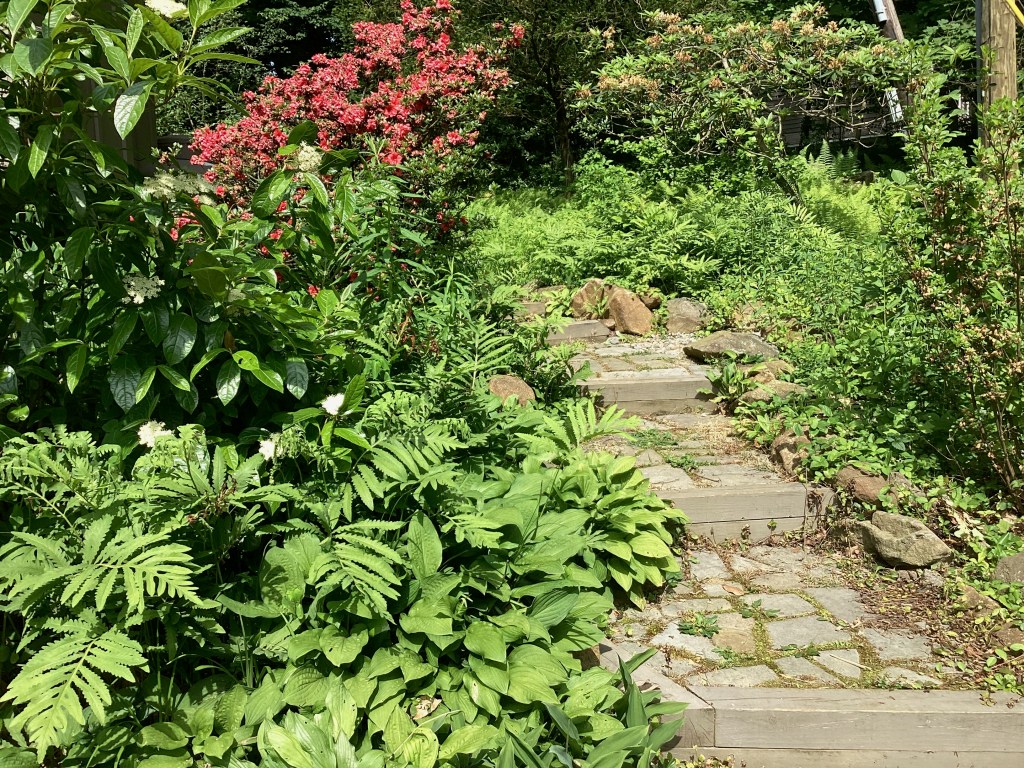
We welcome you to explore our garden and nature habitat of 6 years. It started with our love of birds and the desire to support them. Our garden grew to include pollinator plants, native plant beauties, and nooks for nature to thrive. The property neighbors WCU’s Gordon Natural Area so we attempted to merge gardening with nature in a complementary way. Come and see what a yard without a lawn can look like. It is truly teeming with life all the way around our home. My husband and I continue to DIY everything that you will see. Some of it is still evolving. We are now Native Plant ID Volunteers at Longwood Gardens and try to build on that knowledge in our yard. We will be delighted to greet you and answer any questions.
*Please note that we are located on a hillside with uneven paths, stone steps, and wood chips leading to the backyard. The wide front yard can be viewed from street level, but the smaller backyard is not ADA accessible.
(13) 6 Stanton Ave., Green Lifestyle: Chickens
Native plants, chickens, composting, rainwater collection/sustainable food, and flower garden
We moved into this 1948 post-war home in 2020 and have done a major overhaul of the backyard. Where there were once dying rose plants and overgrown mugwort, we have put in a solar-powered pond/fountain, 4 raised beds for growing food/flowers, a chicken coop with 5 chickens, and two composting bins. Additionally, we use a large rain barrel to collect rainwater to water the plants throughout the growing season. The sideyard and backyard also contain several species of native plants with the goal of bringing a broader diversity of insects and animals to the property. We have seen foxes, rabbits, moles, groundhogs, opossums, skunks, snakes, frogs, hawks, bluebirds, woodpeckers, monarchs, and more return year after year.




 West Chester Green Team