One of the Green Team’s component groups is Don’t Spray Me!, a citizens’ organization in West Chester PA and surrounding communities that came into existence in 2015 to raise awareness about the dangers of anti-mosquito spraying and the use of other chemicals.
Don’t Spray Me! (yes, with an exclamation mark for emphasis!) advocates effective non-chemical means of controlling mosquitoes and other inconveniences of daily life without harming the natural and human environment.
Don’t Spray Me! also supports healthful practices in growing gardens, particularly those that produce food. We emphasize natural practices, restoring soil quality, aiding absorption of storm water into the soil, educating the young, and converting home lawn space into organic veggie gardens and meadows.
Pesticides and herbicides don’t just go away; they lodge long-term in the environment. Beyond Pesticides‘ 8/23 article “Transport of Pesticides through Waterways Raises Serious Contamination Problems“ reviews the problem: about 4/5 of “pesticide active substances” degrade in the soil (some harmlessly, some into even more toxic compounds); of the remaining 1/5, half remains in the soil and half filters into aquifers, the source of much human drinking water. Some portion of pesticides, and also insecticides and fungicides, flows as surface runoff or from underground into streams, rivers, and ultimately the oceans. Effects on human and other life are hard to quantify, but research is advancing on this score. Bees, essential to pollination, are threatened by one particular class of pesticides, neonicotinoids, whose use should be banned but at least has been limited by 9 states.
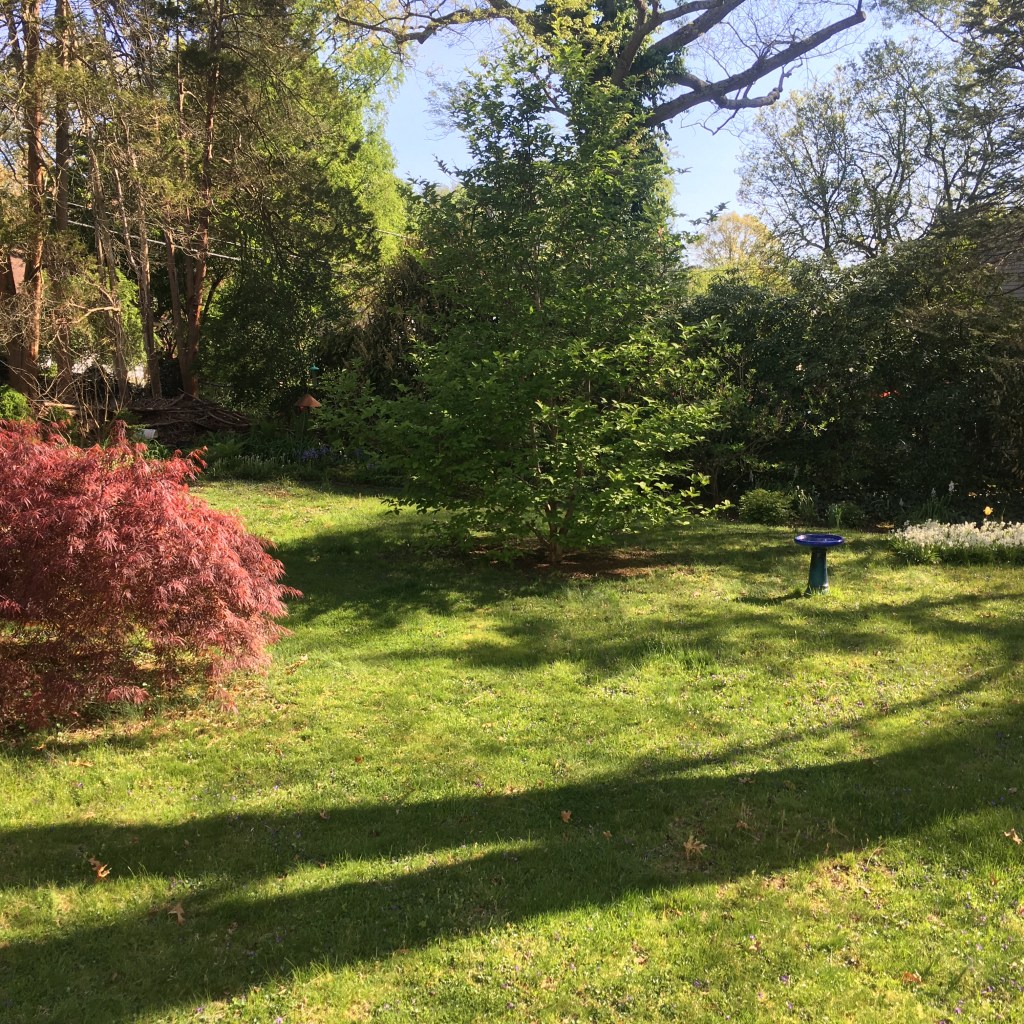
Lawns are a particular problem. Americans pour $40 billion a year on grass seed, sod, pesticides, herbicides, and chemical fertilizers into crafting the “perfect lawn.” Is it worth it? No way! A natural lawn abounds in insects and microscopic organisms that nourish other species; and it supports varied plants such as violets that create beauty or that, like purslane, are edible as long as uncontaminated by chemicals or pets. And by the way, cornmeal really does prevent crab grass from germinating!
After many lawsuits from landscapers and homeowners claiming harm (often through cancer) by glyphosate, the main active ingredient in the herbicide Roundup, Bayer-Monsanto has finally withdrawn that product from home use. Its continued use in agriculture and by public entities and landscaping companies means that dangers persist, including to species like Monarch butterflies that feed on plants killed wherever Roundup is sprayed. Roundup has been found in a number of foods, such as non-organic oats. Runoff into streams also poses dangers to aquatic life. Furthermore, some weeds are no becoming resistant to Roundup, just as mosquitoes are to some insecticides. For our past articles on Roundup, see here.
For non-toxic ways to kill weeds, see Don’t Spray Me! here and also ConsumerNotice.org.
Don’t Spray Me! has its own web site and Facebook page. For advice on mosquito season there, see “It’s mosquito season! Time to protect people and bees.”
 West Chester Green Team