
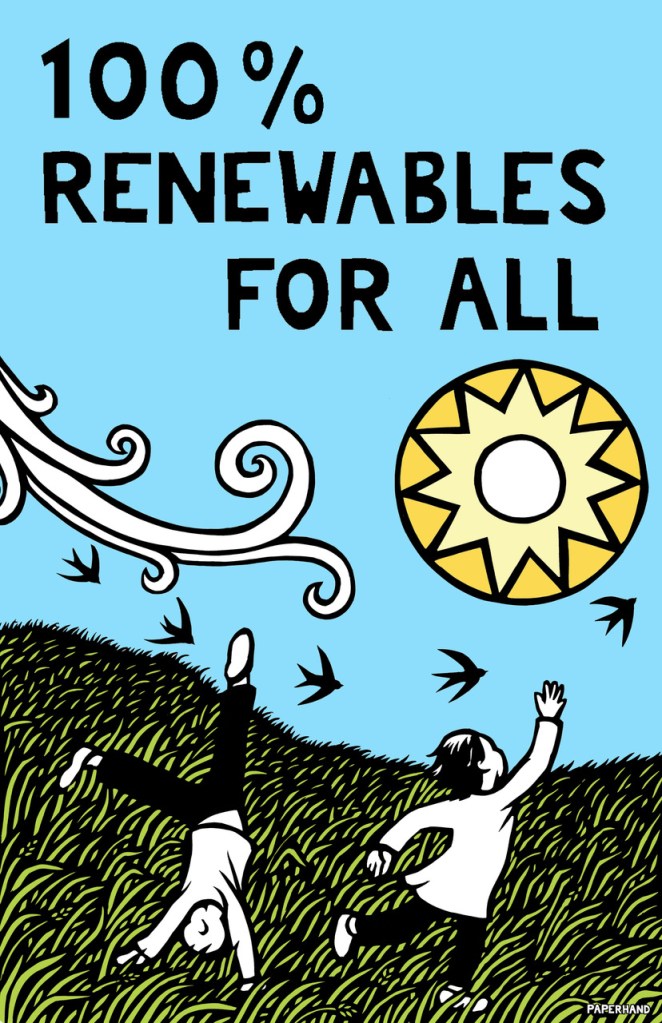
The West Chester Green Team helps educate the community on the severe consequences of climate change and shows what can be done to reduce greenhouse gas emissions in order to improve our environment and our own quality of life.
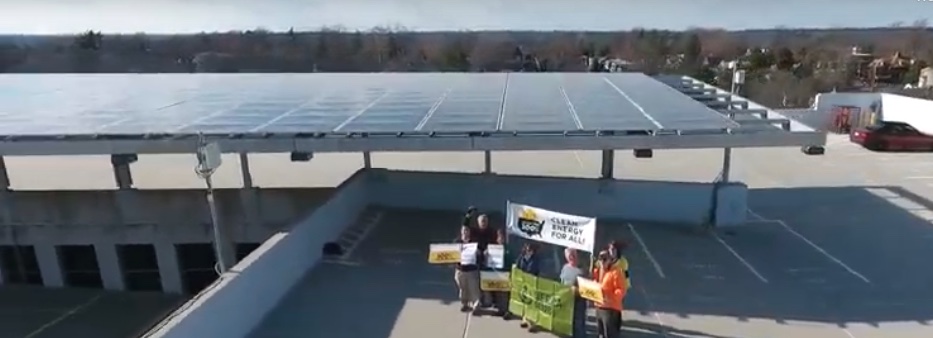
We have worked closely with Chesco Ready for 100, a clean energy project of the Southeastern Sierra Club Group and the source of the image to the left.
Of course, people don’t want to pay more for energy. But the “cheap energy in our time” attitude, which has prevailed since humans started burning wood and much later coal and then oil and gas, is a failed policy. We all pay the price for all energy consumed, in environmental degradation and threats to human health from fine particle pollution (particles under about 1/30 the diameter of a human hair). The title “Fossil fuel air pollution responsible for 1 in 5 deaths worldwide” sums up a dire situation. The underlying study by the Harvard School of Public Health counts 350,000 premature deaths in the US alone, including small children suffering lower respiratory infection and seniors living near fracking operations.
Public transportation is part of the effort to reduce vehicle travel with the consequent greenhouse gas releases, air pollution and environmental destruction from highways. See the latest on the hope of restoring a rail connection between West Chester and Philadelphia (which existed until 1986), possibly by battery-powered trains, here and here.
The situation is urgent: storms are ever more powerful; wildfires are spreading uncontrollably, thus adding even moire CO2 to an overloaded atmosphere; oceans are warming and the long-standing current circulations of the North Atlantic (including the Gulf Stream, which currently keeps northwestern Europe temperate) are endangered. For a summary of how critical the situation is as of summer 2023, see here.
Besides their devastating effect on nature, tornadoes, floods and hurricanes are destroying communities, infrastructure, and facilities. The future of cities and communities across the country depends on a rapid and just transition to 100% clean, renewable energy! Less favored demographic groups are suffering the most; and already, climate refugees migrating into or within the US (mostly from South to North; and some Rust Belt cities are now becoming “Climate Receiver” cities) will reshape our society and call out for planning and adaptations.
People in our country, especially those without working cooling equipment at home, are suffering and even dying from excess heat. A recent report from Public Citizen estimates that heat stress in the US causes at least 170,000 work-related injuries a year and up to 2,000 deaths, especially from agricultural and construction workers forced to labor outdoors often without appropriate breaks and rehydration.
In Pennsylvania, former Governor Wolf signed the state onto the Regional Greenhouse Gas Initiative, which puts a fee on carbon emissions from power production and uses the proceeds to encourage energy conservation and renewable energy. Unfortunately, anti-environment elements in the state legislature went to court to block it. Thus currently, as described in an 8/7/23 editorial by Clean Air Action Fund president Joseph Otis Minott in the Pennsylvania Capital-Star,
“In March, Pennsylvania passed up millions of dollars that could have gone toward tackling climate change and reducing energy costs for millions of Pennsylvania residents. It’s not the first time Pennsylvanians have missed out on this money, and it’s going to keep happening unless Pennsylvania is finally allowed to participate in the Regional Greenhouse Gas Initiative (RGGI). Recently, we’ve started a movement at rggi4pa.org to change this trajectory….”
A 2023 study, “Pennsylvania’s Looming Climate Cost Crisis: The Rising Price to Protect Communities from Extreme Heat, Precipitation, and Sea Level Rise” (see it here), shows that “Pennsylvania’s municipal governments will need to spend at least $15.47 billion by 2040, or nearly $1 billion a year, to protect residents from extreme heat, heavy precipitation events, and rising sea levels.” $1 billion a year is real money, and the more we delay, the higher the cost.
Climate, Energy and Chester County
Despite the gloomy climate news, we must all pull together to do our part in reducing fossil fuel usage and greenhouse gases in the atmosphere—as people are doing around the world.
In our immediate area, the West Chester Area Council of Governments (East Bradford, East Goshen, West Chester, West Goshen, West Whiteland and Westtown) is working with the Cadmus Group toward using 100% renewable electricity by 2035 and 100% renewable energy for heat and transportation by 2050. See WCACOG’s page West Chester Area Clean Energy Future here. See clean energy information here and overall information from Chester County government and many useful links here.
As the page with Chester County’s official plan to do its part to counteract the climate crisis says:
“The Chester County Climate Action Plan was adopted by the County Commissioners on October 7, 2021. The plan was prepared by the Chester County Planning Commission in partnership with the County’s Environmental Advisory Board. The Climate Action Plan provides a blueprint for reducing greenhouse gas emissions and increasing energy efficiency at County government facilities and community-wide.”
History: The Evidence on Climate
What a generation ago was regarded by many as science fiction is today a crisis, not only climatic but biological and planetary, since habitats are changing far faster than species can adapt. Respected scientists have reached the consensus that humanity’s current irresponsible behavior will have catastrophic consequences.
The Earth’s climate has changed throughout history. Our following italicized paragraphs are slightly edited from the text of NASA.
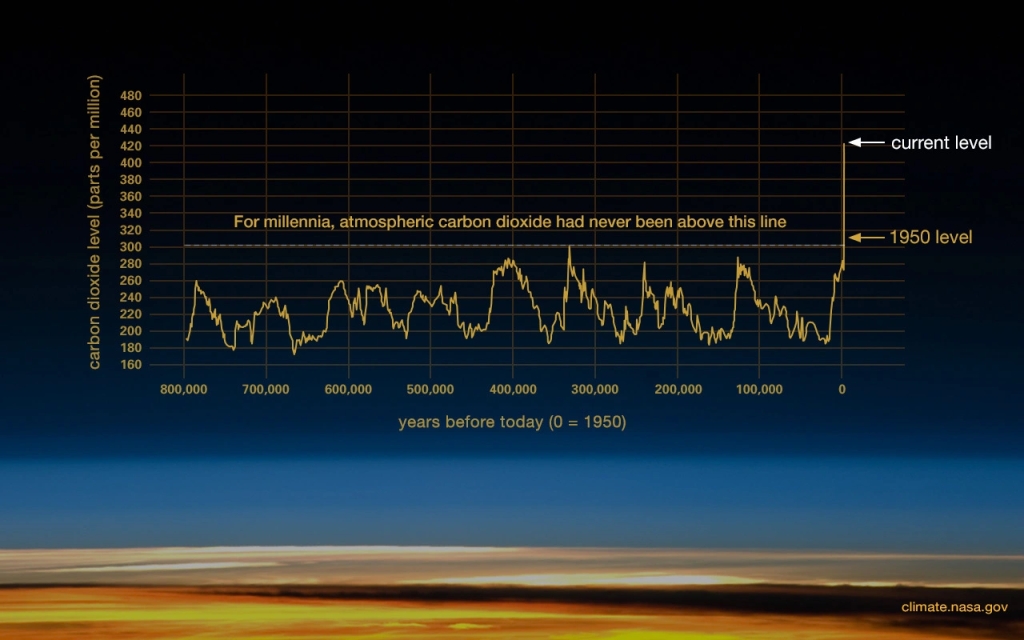
Earth’s climate has changed throughout history. Just in the last 800,000 years, there have been eight cycles of ice ages and warmer periods, with the end of the last ice age about 11,700 years ago marking the beginning of the modern climate era — and of human civilization. Most of these climate changes are attributed to very small variations in Earth’s orbit that change the amount of solar energy our planet receives.
Most of the current warming trend is extremely likely (greater than 95% probability) to result from human activity since the mid-20th century and is proceeding at an unprecedented rate. Earth-orbiting satellites and other technology have enabled scientists to collect many different types of information about our planet and its climate on a global scale.
The current warming trend is different because it is clearly the result of human activities since the mid-1800s, and is proceeding at a rate not seen over many recent millennia. It is undeniable that human activities have produced the atmospheric gases that have trapped more of the Sun’s energy in the Earth system. This extra energy has warmed the atmosphere, ocean, and land, and widespread and rapid changes in the atmosphere, ocean, cryosphere, and biosphere have occurred.
…current warming is occurring roughly 10 times faster than the average rate of warming after an ice age. Carbon dioxide from human activities is increasing about 250 times faster than it did from natural sources after the last Ice Age.
See more on “How Do We Know Climate Change Is Real?” at NASA.
Effects of Climate Change

Increasing average temperatures increase the energy in the atmosphere and oceans, which is then dispersed by destructive weather events, as we have seen all too clearly in the last few years.
Rising atmospheric heat, including very dramatically in the Arctic, also affects the speed and oscillation of the jet stream and, in a truly disastrous scenario, might even disrupt the Gulf Stream due to meltwater pouring south from Greenland’s melting glaciers..
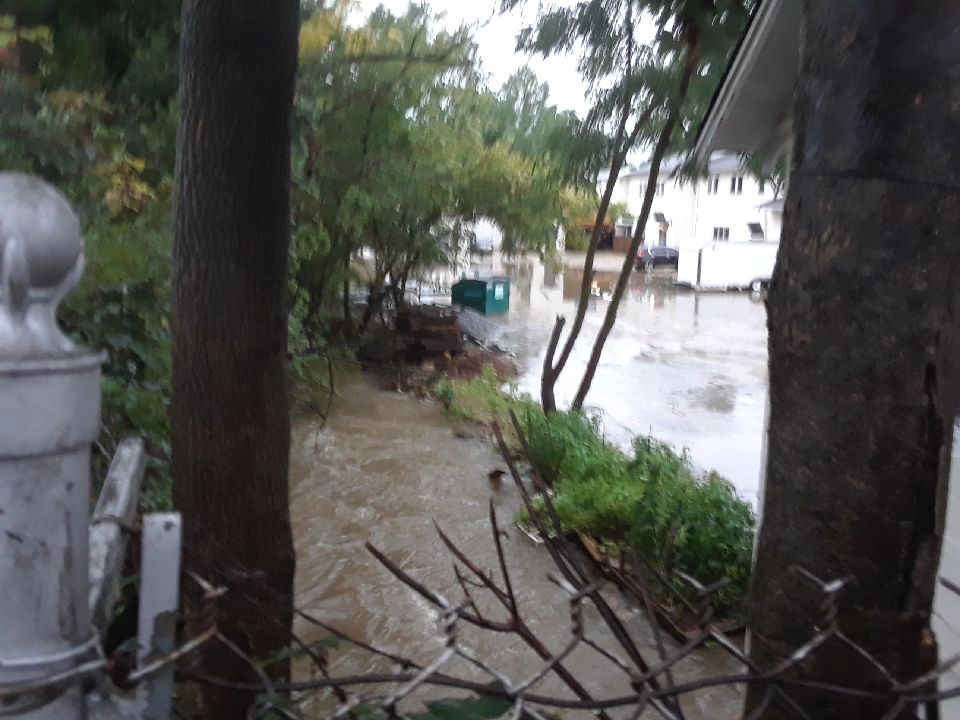
Severe storms—thunderstorms, downpours, blizzards, hurricanes, cyclones, and tornadoes,—bring in their wake flooding, loss of life and property, water contamination, and diseases.
Heat waves are becoming longer and deadlier. Dehydration and heat stroke are common heat-related fatalities, and heat can exacerbate underlying conditions, leading now to an alarming heat-induced death toll in places like southern Texas. In Europe, 70,000 deaths were attributed to the 2003 heat wave, 61,000 in 2022, and 2023 could be worse. It is estimated that increasing and longer summer heat adds about $1 billion to the national health costs.
Increased wildfires have proliferated in North America, as we have seen in California and Canada, thus releasing enormous amounts of CO2 into the atmosphere. The annual wildfire season has been growing harsher and longer. In some areas of the West, traditionally thriving trees can no longer reestablish themselves after an extra-hot fire, and some former forestland is going over to scrub land.
Increasing droughts may cut yields of many crops by up to one-third. Meanwhile, crop-devouring insects will also increase in number and energy needs, thus consuming more of vulnerable crops like wheat. The world is already seeing higher food prices and food insecurity., and climate refugees are swelling the exodus of migrants from Central America and the Middle East
Disease-carrying insects will thrive in hotter and more humid conditions; malaria , for example, is threatening to become endemic in Florida.
The world’s oceans are warming and acidifying, with far-reaching effects already underway, such as higher tides (water expands with temperature) and coral reef bleaching.
Rising sea levels will force millions of people around the world become climate refugees, particularly in some highly-populated areas like Bangladesh. Some low-lying island nations are already making evacuation plans.
What Can an Individual or Institution Do?
Sometimes ideas seem not worth carrying out because the impact seems low to you. And yes, doing something to reduce your carbon footprint is a small step. But small steps do help, especially if many people take those steps. So let nothing stop you; these small projects help save the environment and also save you the hard-earned cash on your monthly energy bill.
As one example of how an individual can act, Brian, a resident of Coatesville, aims to not only make a change to his life style but also to help you learn what you can do. Please follow this link to Brian’s website and learn how he reduces his carbon footprint by taking little steps with big impact.
Here is one example of how small steps have big impact: the ducts of your heating/cooling system lose a lot of heat through leaks and exposure to the cold environment of your basement. The result of completely sealing and insulating the ducts can be a temperature decrease of 2 degree Fahrenheit in the basement. That saved heat goes now into the house instead of into the basement.
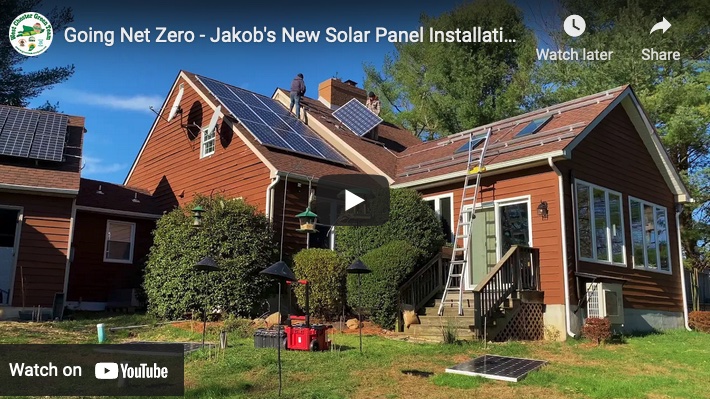
If you are up for moving toward energy self-sufficiency, solar energy is the most popular way for homeowners and businesses to ensure their own clean energy supply. Geothermal energy is also feasible, and heat pumps are very effective. Many new subsidies for home renewable energy installation and insulation are available under the Inflation Reduction Act; see Sierra Club’s summary here.
Our life style choices are important and food production, transportation, and waste are a major factor in greenhouse gas emissions. Growing healthy food for ourselves is of course excellent from many points of view. For the case against eating red meat, see here.
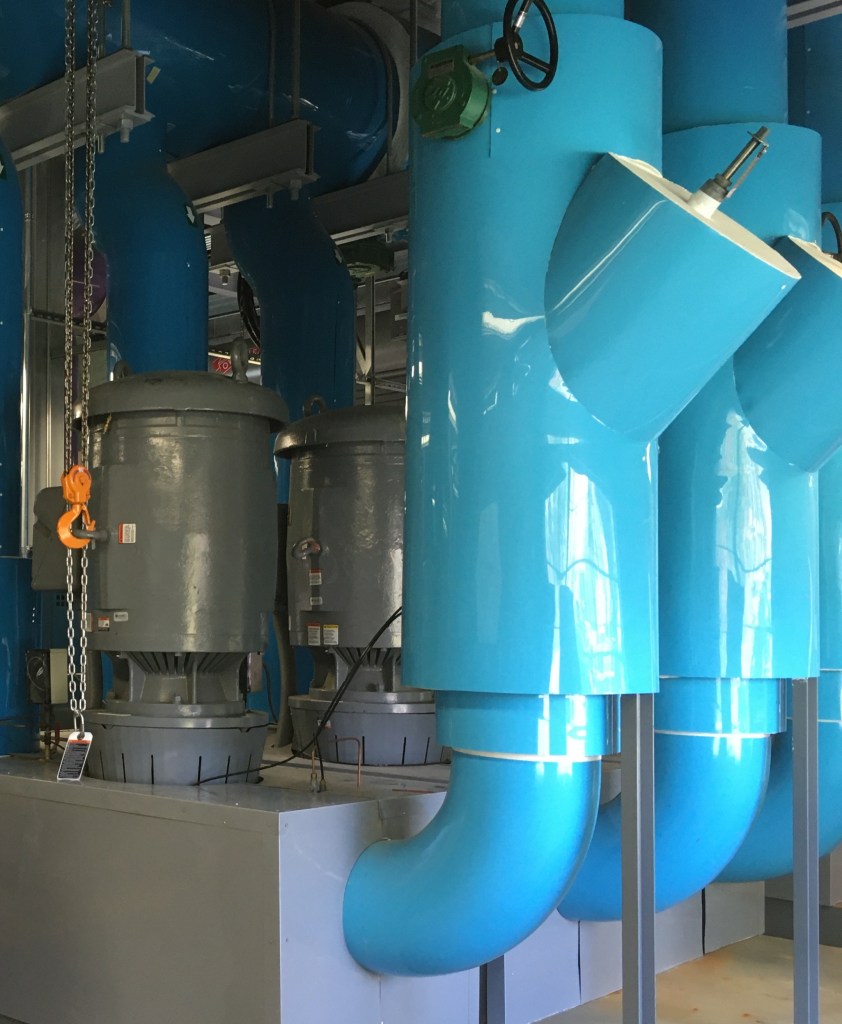
See a 2-minute video here with Director of the WCU Office of Sustainability Dr. Bradley Flamm about WCU’s geothermal operation, which heats and cools almost half of the inside space on campus and allowed demolition of the University’s former coal-fired plant. West Bradford’s municipal building is also geothermally heated and cooled; see video here.
For sources of clean energy funding for individuals, organizations and communities, see Community Advocates for Clean Energy.
 West Chester Green Team