by Cheryl Wanko, WCU Professor of English & Sustainability
With the arrival of fall comes a task dreaded by many: dealing with fallen leaves. Adopt new practices to save time, money, and your hearing, as well as create healthier ecosystems.
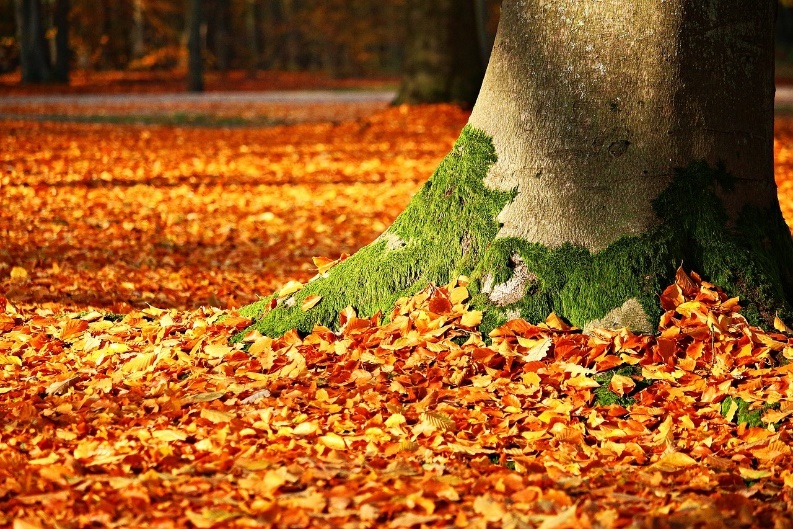
Leave the leaves – research shows that a light layer of whole leaves won’t harm your lawn. If you have too many, rake them under trees (image from Pixabay) or shrubs, and use them to mulch your perennial beds. Even a deep layer won’t hurt what’s planted under them and will provide your dormant plants much-needed insulation in the cold, reducing the need for mulch.
Aid beneficial insects – leaving leaves helps save the insects we all love, such as lightning bugs, butterflies, and other pollinators, by giving them places to overwinter as eggs or chrysalises. Don’t mulch your leaves, though, to avoid killing concealed life. These insects also provide food for some birds, which need massive numbers of spring caterpillars to feed their young, while others catch insects on the wing.
Reduce the fall whine – researchers are finding that one of the greatest environmental stressors for human health is noise. By cutting down on leaf-blowing, we reduce the racket that disrupts our neighborhoods in the fall. Anyone whose physical circumstances require a blower should check out the energy-efficient electric options, since gas fumes irritate not only your lungs, but those of others nearby, particularly children. Of course, picking up a rake can help keep you healthier!
Clear storm drains – water back-up onto roadways in fall and winter can cause slippery, dangerous conditions. Please do your part and maintain drains on or near your property.
Compost – if for some reason you must remove leaves, never put them or any yard waste in the trash. Compost them yourself, offer them to neighbors, leave them in the street at the specified time if your municipality permits, or take them to the designated township compost site. In any case, your leaves will magically turn to healthy soil that you or others can use in gardens.

