Gardening as community
The Green Team, through its Living Landscapes Committee, has initiated or been part of several successful plantings in publicly visible spaces in West Chester: at the Chester County History Center, the Chester County Art Association, the Chestnut St. Parking Garage, Veterans’ Park, and 103 S. High St.
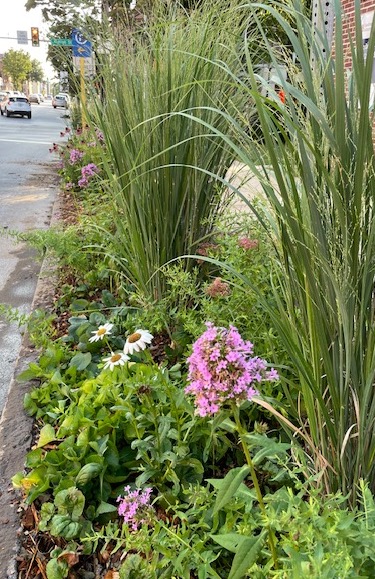
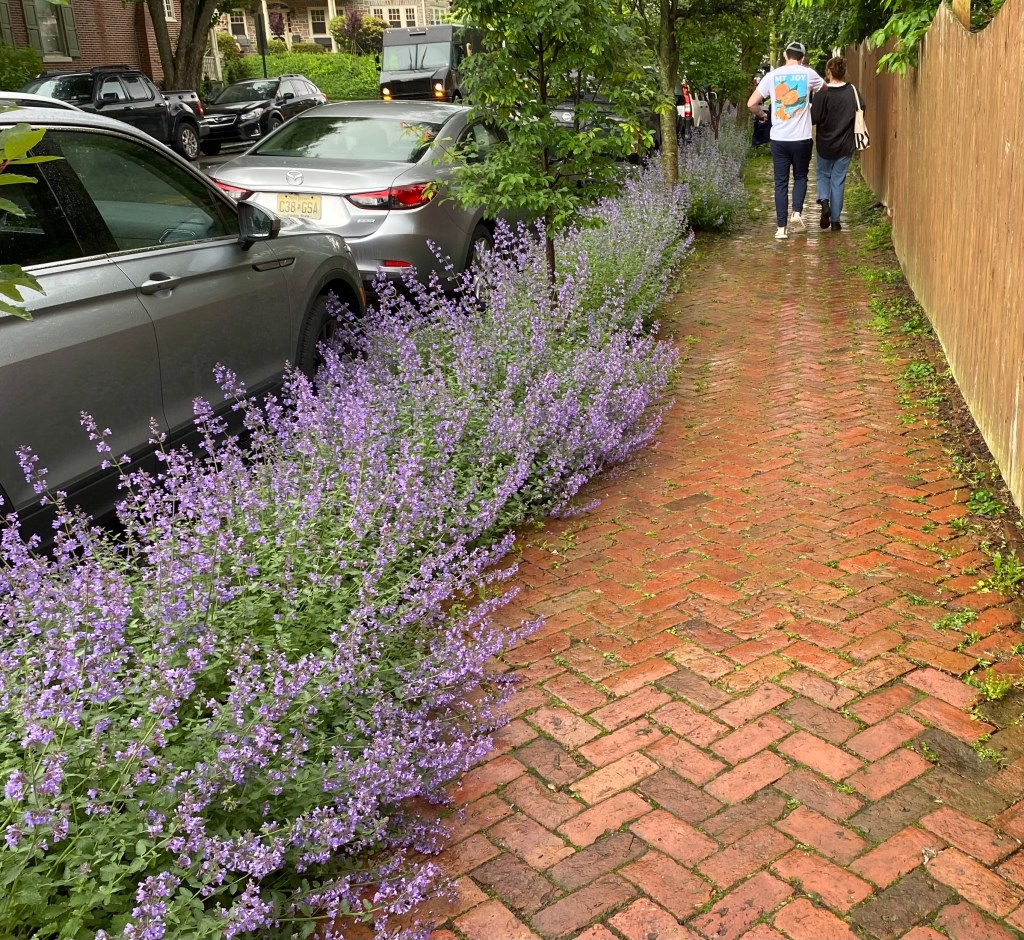
Some of those are verge plantings, that is, in the strips between street and sidewalk, also known as hellstrips. To the right: planted strip on W. Chestnut St., outside the Chester County History Center. For an interview with the coordinator of several of those projects, see here.
We have also operated community garden programs. This nationwide movement enables residents who lack suitable outdoor space at home to grow vegetables and other plants on public or private property made available for this use. We found less post-pandemic demand for our program, so we discontinued it, but could see about restarting it if there is a sufficient audience. We salute other community gardens such as the ones on West Rosedale Ave., West Gay St., and Poplar St.
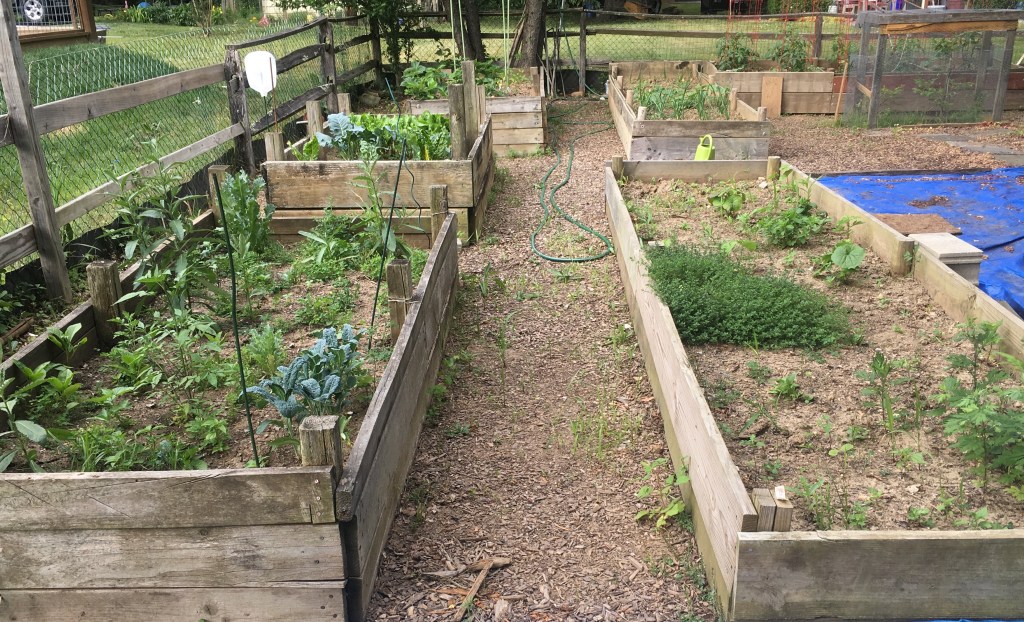
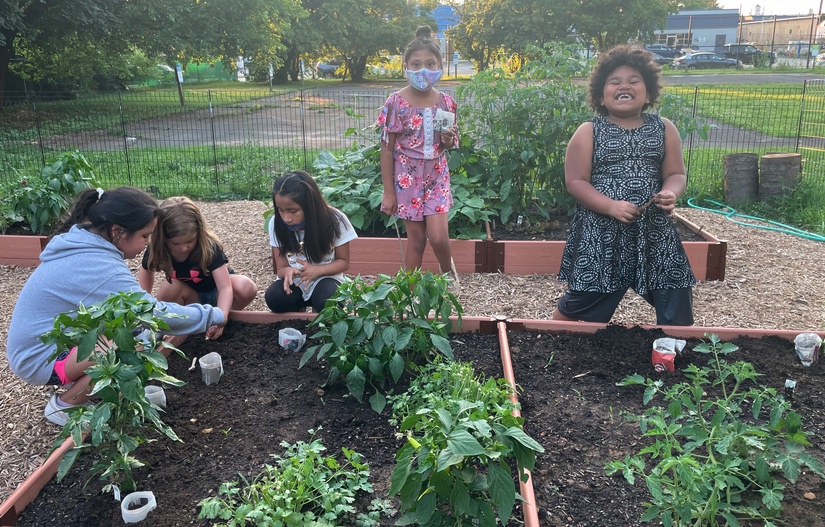
Community gardens are an important resource to bring children into an appreciation of the outdoors, the character-building practice of gardening, the value of healthy food, and the thrill of growing it oneself. To the left: one of our community gardens underway.
We also encourage lawn to meadow or garden conversion. For information and inspiration, see “Lawn to Native Pollinator Garden Conversion” here. Some municipalities and Homeowner Associations have not caught up yet with the disadvantages of lawns (application of pesticides, herbicides, lots of water…) and the benefits of native plant meadows, vegetables and flowers. For advice on navigating any restrictions, see “Lawn vs. Garden: How To Stand Up To Your HOA For A Healthier Yard” in Green America.
Gardeners love to share their knowledge and enthusiasm with others. See our series of videos with local gardeners and gardens (and some other topics) here. See sites and write-ups from our 2024 garden tour (with the West Chester Garden Club) here. For our 2025 tour, see here. In 2022 we held self-guided walking tours, including in northern Chester County, with extensive write-ups here. In 2021 our “Green Man garden tour” included ten gardens visible from sidewalks, with write-ups still available here. See our “first annual organic garden tour” in 2019 here. The gardens on the 2021 and 2022 tours may still be viewed from the sidewalk, but not the gardens in the 2019 and 2024 tours. Each year we also aim to have at least one excursion to a local garden of interest
To learn why “Community Gardens are Good for People,” click here. To find out more about our garden programs or to offer to help, please contact us here.
Trees
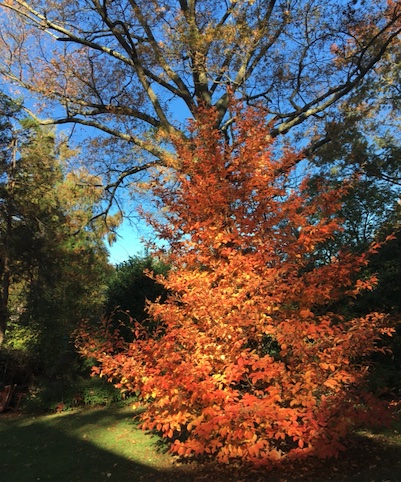
Trees belong to the same realm as gardening and food. We encourage the planting and maintenance of appropriate trees on streets and in yards and public spaces.
Trees retain soil and moisture, spread shade, remove carbon from the atmosphere, and provide food and shelter for innumerable species of animals, from tiny wasp larvae to soaring hawks.
Trees are also good for people. Trees cool asphalt, enhance the attractiveness of city streets and yards, create a whole outdoor architecture in open space and city parks, inspire our sense of beauty, and soothe our daily stresses.
We are committed to Tree Equity, that is, seeing that areas of differing demographics receive fair and equal access to the many benefits of trees. For a summary of how discriminatory urban tree cover affects people and the environment, see “To Feel Less Heat, We Need More Trees in Our Cities” by Ben Jealous, executive director of the Sierra Club, here. See more on Tree Equity at American Forests.
From the Common Environmental Agenda, submitted by the Chester County Environment Alliance to the County Commissioners in 2022, recommendations on tree-planting policy:
- Encourage municipalities to adopt a “No net loss” tree policy to maintain current tree coverage. Among other benefits, trees improve esthetic and economic values, capture carbon, reduce runoff, increase stormwater infiltration capacity, and capture toxins before they reach the local waterways. Developers in particular should be prevented from damaging or cutting down heritage quality trees and be required to retain or plant a certain level of tree cover….
Find out more about The Benefits of Trees here.
Alleys
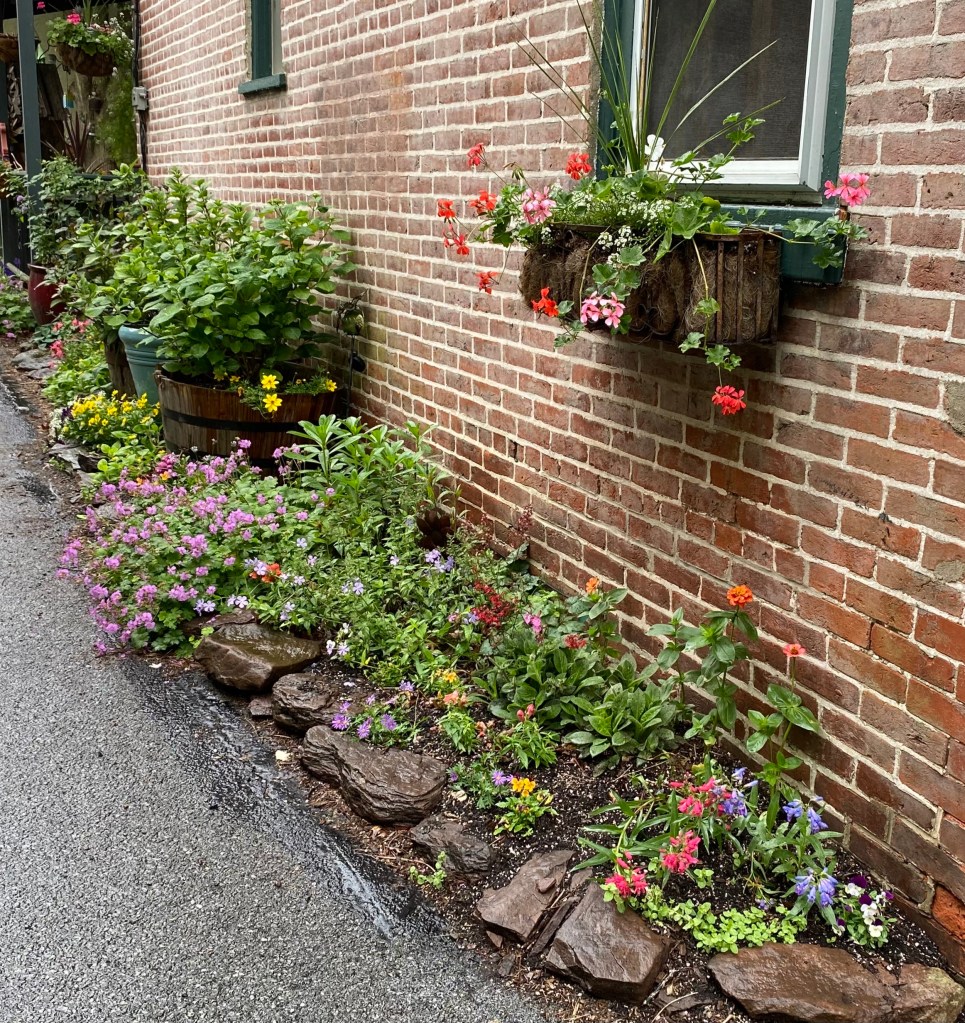
In 2023 we launched a pilot project for alley beautification in West Chester.
Why are alleys important? The more urban type of alley creates an outdoor “room,” bounded by fences and the walls of buildings, offering small unexpected areas for planting flowers, bushes, and vines, either in the ground or in strategically placed containers.
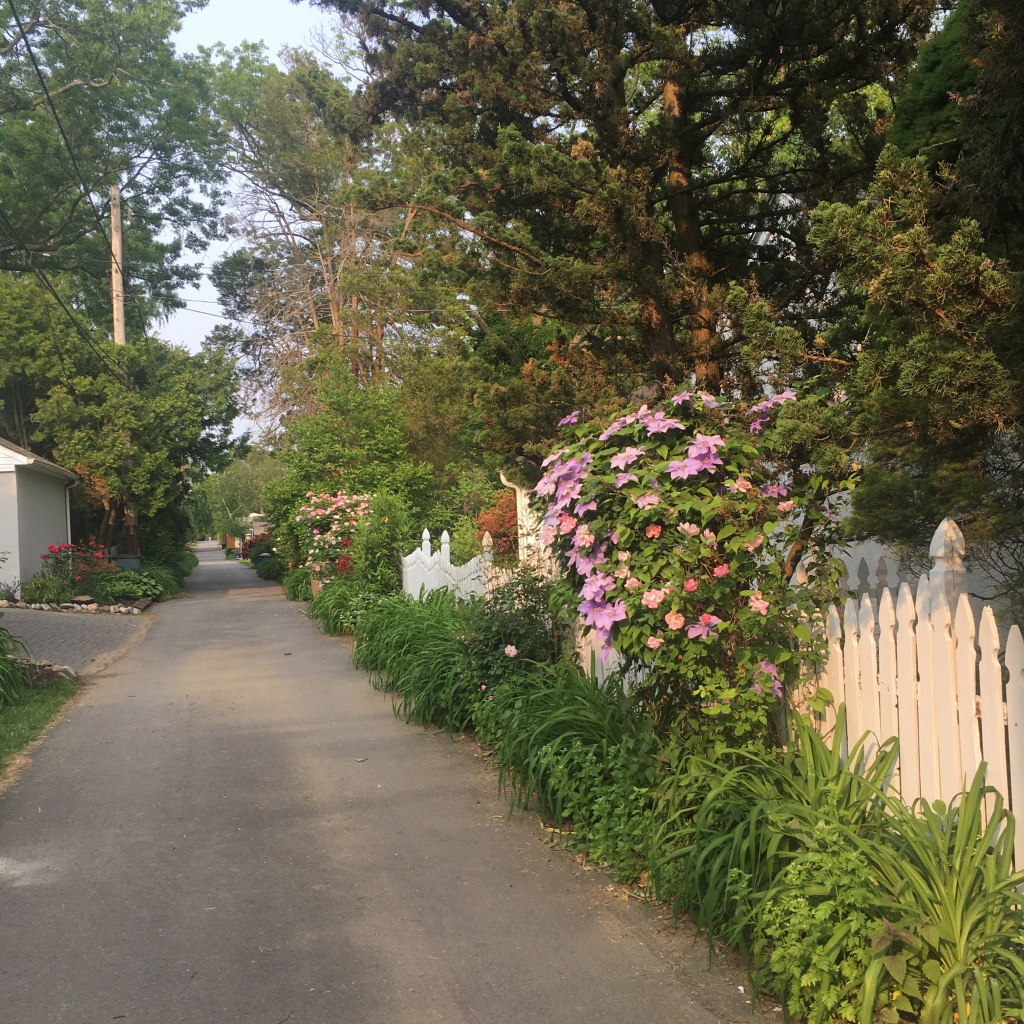
The “country lane” type of alley is more open, with low fences, few adjacent buildings, plentiful alleyside plantings, and attractive views into back yards.
All alleys allow comfortable dog-walking, family recreation space, public places for neighbors to catch up with each other, and relatively car-free terrain for joggers and strollers.
Rain gardens
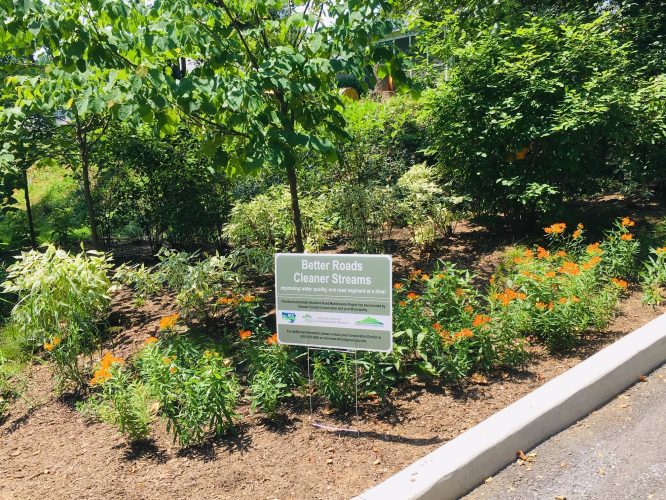
Rain gardens are a specialized type of garden, on private or public property, designed to hold runoff for up to a day or two after a rain or snow melt-off. We have been helping to promote and maintain rain gardens located at the edge of streets, where they absorb water and the pollutants that come with it, that would otherwise run into our streams either directly or via a storm water collection system.
West Chester Borough actively maintains its several rain gardens and has a program for residents to help out; see “Adopt-a-Rain Garden” here
For more on rain gardens, see here on our site and also info at CRC Watersheds.
What do we learn and achieve from gardening?
Many of us in Chester County celebrate Earth Day every day. Earth herself is being mistreated, but we can work hard to mend our human ways toward her while improving our own life styles and eating habits.
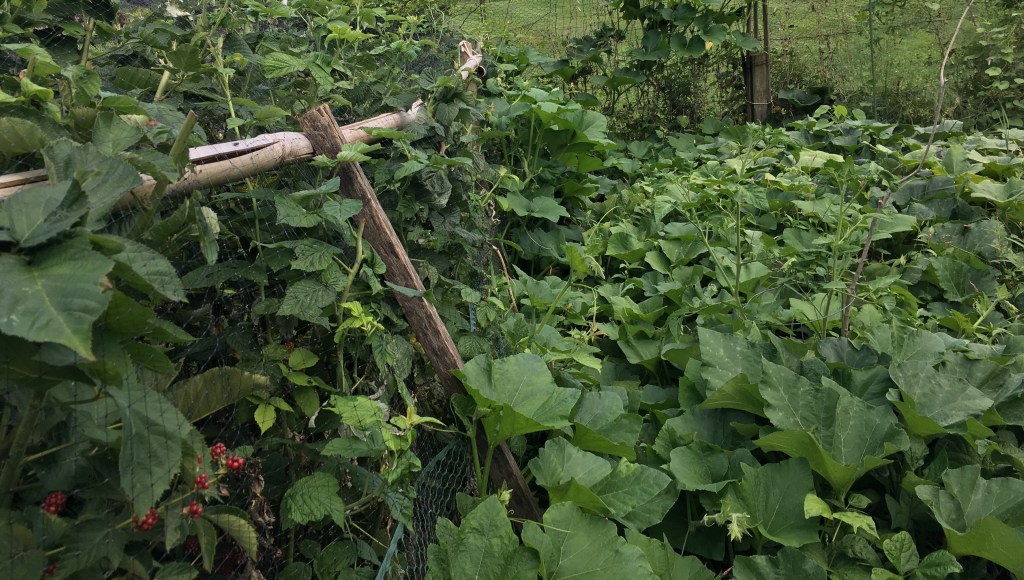
One way of making things better between ourselves and Earth is enjoying the thrill of seeing seeds wend their way up into flowers, vegetables and fruits… and healthy food on the table.
If squash wants to grow twenty-foot vines, should we interfere? It’s a question of philosophy: some of us would give it free rein, even at the expense of other plantings being submerged; others of us would severely restrict it to its appointed space.
Sometimes the distinction between the esthetic and the edible isn’t clear. The tomato, imported to Europe in the 16th century, was originally grown there for decorative use and the fruit was considered toxic! Now the balance has definitely shifted to the edible function.
When we garden, we install plants in a hybrid environment, neither in the state of nature nor protected by four walls and a roof; and in return, they enter into a state of symbiosis with us: we give them a place to grow; and they offer us satisfaction, beauty, and food.
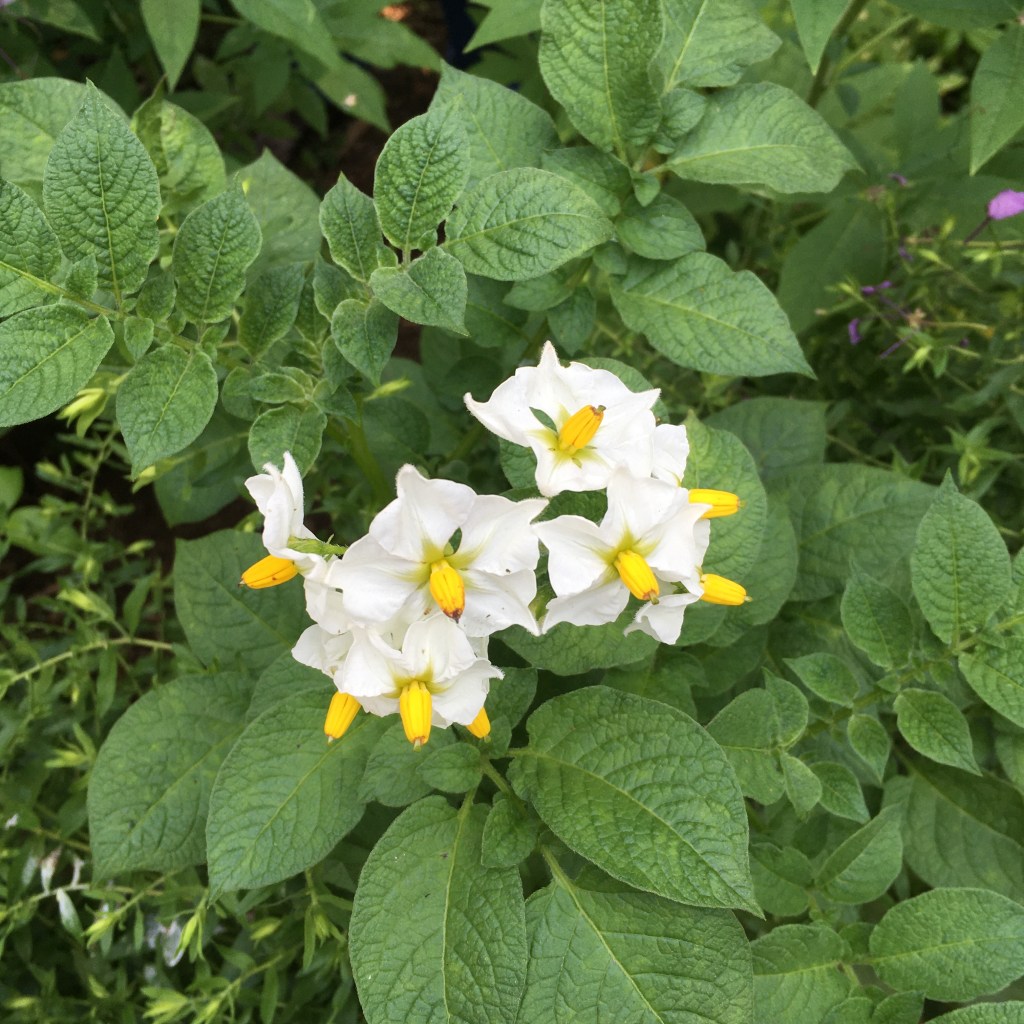
Many perennials give us food year after year, like asparagus and rhubarb, or overwinter when conditions are right, like kale and arugula. The attractive white and yellow flowers and glossy leaves pictured above grew from a potato that lurked in the ground over the winter. And perennial flowers, like echinacea and black-eyed Susan, develop stable root systems and return to life every spring.
It is a particular pleasure when we see desirable plants seed themselves. Many flowers do this, of course, from one year to the next, such as the invincible annual cleome; and some, like foxgloves, are on a savvy two-year cycle with perennial longings.
Gardening also teaches us some valuable life lessons:
• It takes time for plants to grow, and like people they go through recognizable stages. Pea or squash vines, starting as small seeds, develop fast in their infancy, move along to maturity, weather permitting, and produce what can become, if we save seeds, the next generation.
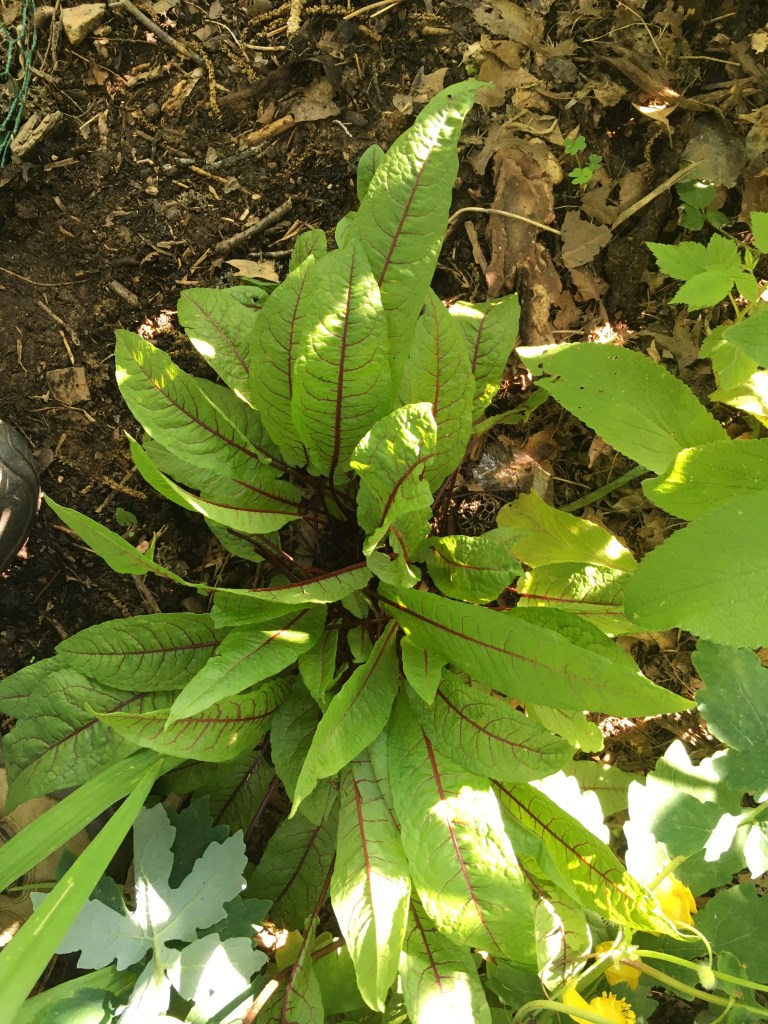
• We can open ourselves to surprise by giving unknown plants a chance to declare themselves before we weed. Plants can unexpectedly overwinter or self-seed, or appear from unknown sources. This bloody sorrel, a red-veined spinach-like leaf crop with an unfortunate name, must have been strategically carried into the vegetable garden by a passing bird.
• Good results depend on patience and continuous effort. If we stop weeding for even a couple of weeks, we will spend more time repairing the damage than we saved by taking a weeding vacation; if we stop watering when our plants are drying up, they will not come back, unless they have the deep root systems of perennials.
• Let’s learn our limits! We can collaborate with plants but we can’t control them, or their needs, or the weather; we can amend the soil, but only so much: it would take generations for clay to become loam and lawns will always be reluctant to grow under trees.
• We need to pay attention, look for facts and evidence about what is going right and wrong, and remain in touch with something outside ourselves: the reality of the garden.
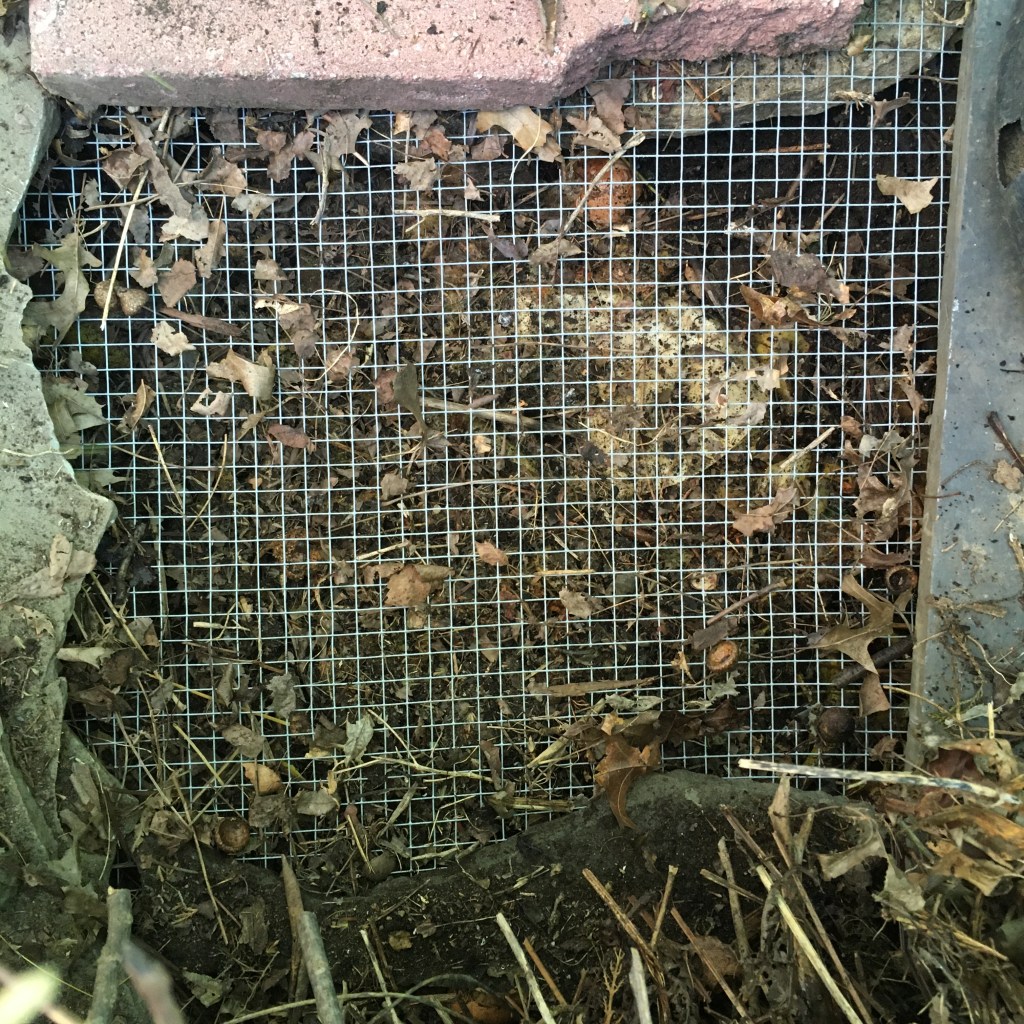
• There are no good shortcuts; compost and mulch, our friends, take time to produce. To the right: unusable organic matter from the kitchen returns rapidly and aerobically to nature, under a strong wire mesh bordered with stones to keep rodents from feasting.
• Avoid pesticides, herbicides and chemical fertilizers, which destroy soil organisms, beneficial insects and worms, and ultimately impoverish the soil itself.
• Peace of mind and inner relaxation — qualities not easily acquired in today’s busy life — dwell in the garden for us to gather into ourselves along with what grows there.
Gardening fosters a whole consciousness and understanding about the Earth and how we relate to it:
• The climate is changing; many areas are more subject to drought and floods, heat and cold, than they have been for many centuries. Large areas in Australia and California, and now Canada and Brazil, have been burning due to record hot and dry weather; the prospective 2021 grape harvest was destroyed in France by hot weather followed by freezing; one of the prime wine regions, the Jura, is becoming inhospitable to the grape. We may think “It can’t happen here,” but it will.
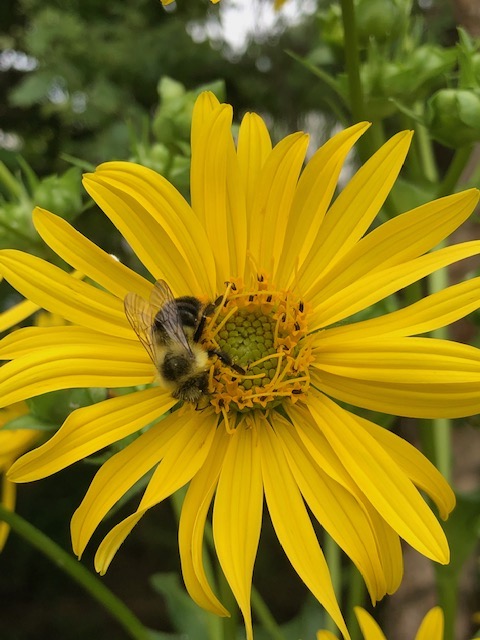
• Because native plants have adjusted their needs to our climate and soil, they do a lot better than exotics when adverse weather strikes. And they evolved in symbiosis with native pollinators, which depend on them.
• The amount of water that soil can hold depends largely on the amount of organic material in the soil. This would be a good time for American gardeners and farmers to depend less on chemical fertilizers and more on treating soil as a living organism that also takes carbon out of circulation.
• Nature has evolved as one great system in each micro-environment. We need to respect plant and animal life that live together in a natural order we can’t readily grasp. We do know that healthy food must be grown in healthy soil.
By gardening in our own yards, we show our appreciation of nature; and we can give away some of our produce to those who need it, and we can encourage others to garden… and in turn to spread the satisfaction and knowledge of feeling in harmony with nature.
Many of our neighbors have been working hard to bring us programming, both online and in person, about how we live on and with the Earth. Please find the large array of local events in our calendar at the bottom of our home page; and join in!
For more articles on Gardens and Food, click here. Tempted to use pesticides and herbicides? Read here and think again!
 West Chester Green Team